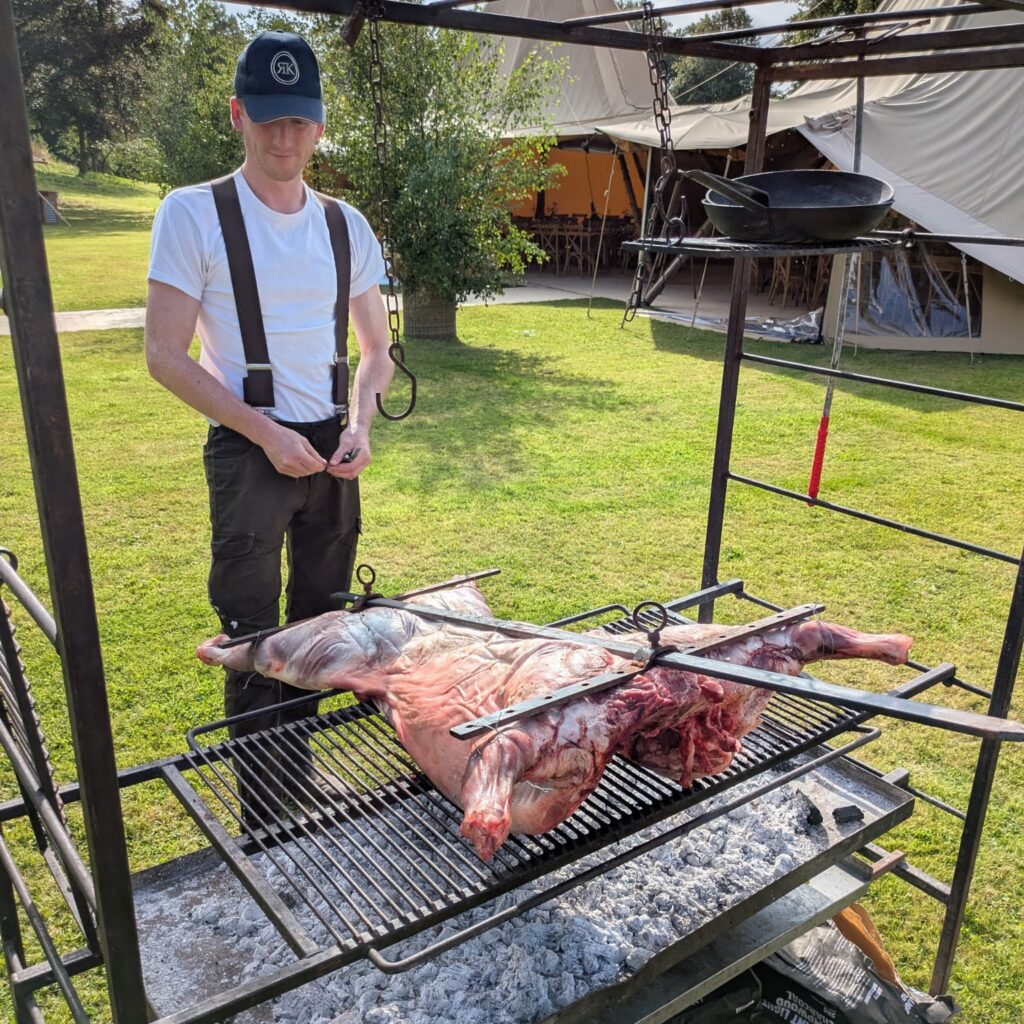
Ror’s Kitchen specialises in asado, a style of cooking learned from the gauchos of Argentina.
Over four to six hours, depending on the wind and heat, they would cook a lamb or a whole joint of meat on a cross above an open fire, basting it periodically with salt water, or ‘salmuera’. This works to dissipate the heat, allowing for a more even cooking, but mainly adds seasoning, since the meat is not salted beforehand.
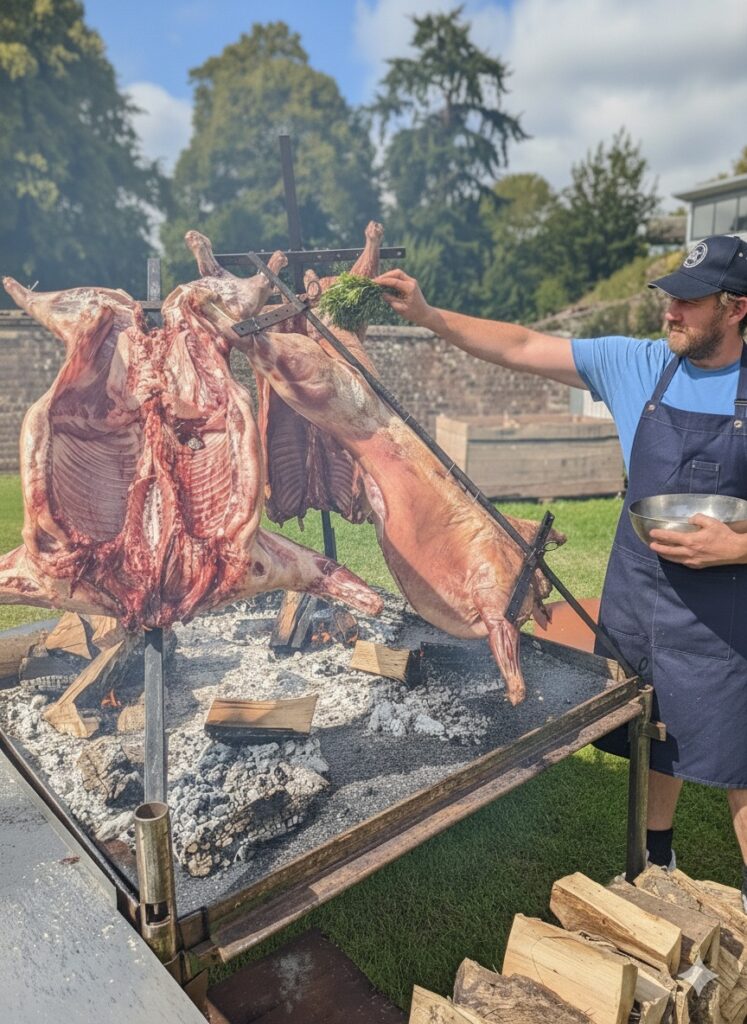
The fire is relatively gentle compared to other barbecue styles; you don’t want to burn the outside before the inside is done! The lamb -or whichever meat you are using- is opened down the middle and stretched on a metal cross which stands at a forty-five degree angle above the fire. The harder parts of the meat, like the neck and shoulder, are placed closer to the fire, and the whole thing is turned every so often to ensure an even cooking.
‘Cooking lamb asado over open fire is a slow dance with the flames—patience and passion are your only ingredients’.
Francis mallmann
Here’s how it’s done
1
Step 1: get everything ready. Make your salmuera. Assemble your fire table, or dig your pit if you’re cooking over the grass, get your logs stacked up nicely (always hardwood – roughly half a ton bag for two lambs). Look at the weather forecast, as this will determine when you need to put the lamb on, and think about where the smoke will blow.
2
Step 2: light the fire half an hour before you want to cook. Start in the corner, with heat coming from the lamb’s shoulder.
3
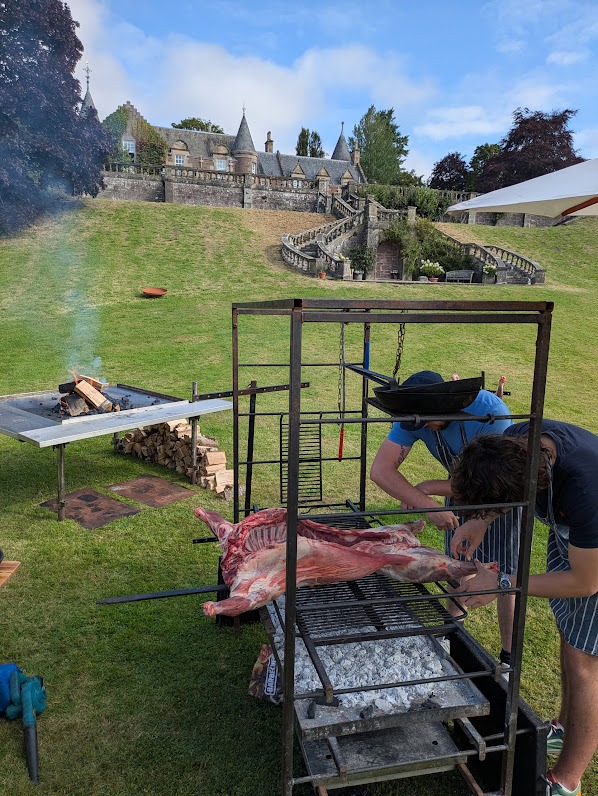
Step 3: the preparation of the lamb. Remove the neck and cut the backbone so the lamb can be splayed open on the cross, with stainless steel wires holding it in place. This is normally a two-person job.
4
Step 4: when you’re ready, hang the lamb over the fire. Again, you’re going to want some help.
5
Step 5: watch and wait, basting every thirty minutes or so with salmuera and a bunch of rosemary before turning the lamb. It’s sensible to have a probe thermometer to hand so that you can check how things are doing!
6
Step 6: take the lamb down, and start carving. We find it’s best to quarter the lamb first, before focusing on the torso.
“Asado is more like a ceremony than a meal’
francis mallmann
How we started
Ror’s desire to explore asado began from watching Francis Mallmann’s ‘Chef’s Table’ episode on repeat. The Argentinian master of asado blends his classical training with his Patagonian love of open-fire grilling to produce a way of cooking that is both rustic and refined. At Ror’s Kitchen, we try to bring a little wilderness onto your plates, channelling Mallmann to make flavours that are elemental and innovative.
In Argentina, the meat is served with a squash salad, some fried potatoes, rocket salad, and flatbread or ‘chapa’, which is cooked on the fire. A salsa verde or chimichurri brings it all together.
We started our Asado journey years ago, with an annual ‘pig party.’ Starting with spit roasted suckling pigs and pit baked vegetables (sometimes of questionable quality!) we have honed our craft over time.
The smokiness of asado meat is more subtle than other barbecue styles which use smoking chambers and covers. There are no rubs or dredges, and the meat never reaches a char. The Argentinian way is simplicity: the flavour of the meat comes first.
Hours of patience reward you with a lamb that is tender and flavoursome. It can’t be rushed, so out come the beers and conversation round the fire as you keep it stoked. Then, once the cooking is done, everyone gets a piece; one lamb can feed forty, so asado means a party. Not only is it an inherently social way to cook- no one wants to be turning a lamb over a fire for six hours on their own- it is also incredibly theatrical. A whole carcass raised on a cross, earning it the name of ‘lamb a la cruz’, can be seen and smelt from all around and becomes a symbol of labour and celebration. You look after the meat, and it will look after you.
‘What we truly love is everything that happens around the fire: the slow cooking, the conversations, the friends arriving one by one, the shared rituals, the connection. An asado isn’t just a meal. It’s a way of gathering.’
Francis Mallmann
It’s our honest opinion that if you want asado for your event, we recommend a butterflied leg of lamb to go with it. Cooked hot and fast, this will have a stronger flavour, and produce a finished product that is more uniform to serve.
Want something a bit closer to home? Why not ask for venison for a more Scottish take on the tradition?
What’s the difference between asado and barbecue? Read our article on barbecue to find out!